Revenue Operations · GTM Strategy · Digital Transformation
Predictable growth. Built on the right foundation.
Most businesses don't have a growth problem. They have a predictability problem. Revenue that spikes and dips. Teams that perform inconsistently. Operations that scale until they suddenly don't.
Stable Scale — predictable growth, built on the right foundation, compounded by the right technology.
Currently accepting 2 new engagements
🏥
I run a private practice
You've built something clinicians are proud of. The business behind it hasn't kept pace. Collections, operations, digital presence, growth — there's a version of this practice that runs better, sees more patients, and doesn't depend on you being there every day.
This is for you →
📈
I lead a sales organization
You have good people. A handful of them are carrying everyone else. The gap isn't talent — it's process, documentation, and the systems that turn conversations into closed revenue. That's fixable without replacing anyone.
Most businesses don't have a growth problem. They have a predictability problem.
Revenue that spikes and dips. Teams that perform inconsistently. Operations that scale until they suddenly don't. The goal was never just growth — it was growth you could see coming and plan around. That's what Stable Scale is built to deliver, for private practices and sales organizations alike.
We highly leverage AI and technology — but as a force multiplier, not a silver bullet. The sequence matters: get the people and process right first, then deploy the tools that compound everything on top of it. That's the window we're in right now, and it changes what's possible for the businesses willing to build in the right order.
1
People first
Alignment, accountability, the right team in the right seats. Without this, nothing else sticks.
2
Process second
Documented, repeatable workflows that don't depend on tribal knowledge or any one person.
3
Technology third — including AI
A force multiplier needs something worth multiplying. Fix the people and process first, then deploy AI and technology to compound everything on top of it. That's the only sequence that works.
Results
What getting it right looks like.
Specific outcomes from real engagements. Numbers over narratives.
—
AR days reduced
Multi-location dental group. 90-day engagement.
—
Reps hitting quota
SaaS sales organization, 12 reps. First time in 6 quarters.
Results placeholders — replace with real numbers from your first engagements.
From the field
Practical frameworks, not thought leadership.
We write about what we've seen work — and what we've watched fail — in real practices and sales organizations.
Private Practice Ops
Why Dental Practices Keep Buying Software That Doesn't Stick
The problem isn't the software. It's the order. Here's what has to happen first.
Private Practice Transformation8 min
Sales
The 80/20 Sales Problem: Why the Fix Isn't Hiring Better Reps
The gap closes faster with better process than better people. Here's the data.
Sales Excellence6 min
White Paper
People → Process → Technology: Why Order Is the Only Thing That Matters
A framework for sequencing transformation so the changes are still working two years later.
Framework12 min
Predictable growth starts with an honest conversation.
Most calls end with at least one thing you can act on immediately — whether we work together or not. 30 minutes with someone who has done this work from every seat in the room.
← Back to home
Private Practice Transformation
Every workflow we fix, every system we build, every digital gap we close — it all traces back to one thing: your ability to attract patients, serve them well, and keep them coming back. That's the business. Everything else is in service of that. And we know this world personally — from field service businesses scaled from single locations to national operations, to a family of dentists we've watched navigate these exact challenges for years.
The honest diagnosis
Successful practices get stuck for predictable reasons.
Clinical outcomes are strong. Revenue is there. But the digital presence is behind, the back office runs on workarounds, and too much depends on people who've always done it a certain way. Hiring is inconsistent. AR is higher than it should be. A second location feels risky. We've helped field service businesses work through every one of these problems — from single-location operations to national scale. Private practices hit the same walls, in the same order. We know exactly what to do.
Most of the financial opportunity in a private practice isn't new revenue — it's recovery. Collections performance sitting 5–15 points below where it should be. AR days that are high not because patients won't pay, but because the follow-up process is broken. We find that gap first, because it usually funds everything else.
But financial recovery is only half of it. The other half is growth — and in a private practice, growth means one thing: more patients walking in, and fewer reasons for them to walk out. A dated digital presence, a friction-filled intake process, and a team that's stretched too thin are all patient acquisition and retention problems dressed up as operational ones. That's where we work.
Financial Performance
Collect what you've earned — then build the foundation to earn more
Stop leaving money in accounts receivable
Most practices we work with are collecting 5–12 percentage points below their adjusted production. That's real money sitting uncollected every month. We close that gap through cleaner processes, better insurance follow-up systems, and overhead discipline that doesn't require cutting corners on care.
Specific work
Collections rate benchmarking against comparable practices
AR aging analysis — where it's stuck and why
Insurance verification and denial management workflows
Overhead ratio targets by category: payroll, supplies, lab, facility
12-month rolling cash forecast you can actually run the business on
Growth & Expansion
Make expansion replicable — not a second first day
A second location shouldn't feel like starting over
The practices that struggle with expansion usually do it before they've systematized the first location. When the playbook only exists in the owner's head, you can't replicate it. We document and package what's working — then help you duplicate it with confidence.
Specific work
Pre-expansion readiness audit — is the first location ready to be duplicated?
Acquisition due diligence and integration planning
De novo site evaluation, buildout planning, and launch playbook
Multi-location management structure and reporting cadence
Brand and patient experience consistency across locations
Operations & Systems
Free up capacity to see more patients without adding overhead
Build an operation that runs whether you're in the building or not
The measure of a well-run practice is how it performs when the owner is on vacation. If the answer is "not as well," you have key-person risk — not a business. We build the SOPs, accountability systems, and scheduling architecture that give you back your time.
Specific work
Scheduling template design and block scheduling implementation
Treatment plan presentation and case acceptance systems
SOP documentation for every recurring front and back office function
KPI dashboard: the 8–12 numbers that actually tell you how the practice is doing
Weekly leadership huddle and monthly performance review cadence
Team & Leadership
The right people, in the right seats, who stay
Stop losing good people to avoidable problems
Turnover is expensive — in recruiting cost, training time, and the institutional knowledge that walks out the door. Most turnover is predictable and preventable. It comes from unclear expectations, inconsistent onboarding, and performance conversations that happen too late. We fix the structure so the right people want to stay.
Specific work
Job scorecards with measurable success criteria for every role
Structured 30-60-90 day onboarding for new hires
Performance review framework tied to observable metrics
Compensation structure analysis and market benchmarking
Leadership development for practice managers and team leads
Discovery calls are 30 minutes. You'll leave with a clear picture of where the biggest opportunities are — whether we work together or not.
Ready to see what's actually possible?
30 minutes. No pitch. An honest conversation about where you are and what getting it right would look like.
← Back to home
Sales & Revenue Operations
We've held every role in the revenue org and scaled teams from first hire to $20M+. Now we build the systems, strategy, and process that make your whole team perform — not just the top few.
The 80/20 problem
Most sales leaders know this is happening. Few know where the fix actually is.
We've been on both sides of this — as the rep carrying the number and as the leader watching the team fall short. The underperformers aren't lazy. They're under-systemized. Your top 20% have figured out through repetition exactly how to document a call, build a proposal, and follow up in a way that re-opens closed conversations. The other 80% haven't had anyone show them how. That's fixable, and it doesn't require replacing anyone.
Where the revenue gap actually comes from
Prospecting
Most reps OK here
The conversation
Most reps OK here
Follow-up quality
Top 20% dominate
Proposal quality
Top 20% dominate
Documentation
Top 20% dominate
The pattern is consistent: the conversation goes fine for most reps. What separates closers from almost-closers is everything that happens in the 48 hours after.
How we fix it
Three things your 80% need. All of them buildable.
We've been the BDR, the AE, the Solutions Engineer, and the Head of Sales. We've built revenue teams from first hire to $20M+ across software, field services, IoT, and professional services. The gap between what a sales org produces and what it could produce is almost always a process and systems problem — not a people problem.
Good systems produce a natural byproduct: cleaner data, better forecasting, and a revenue operation leadership can actually see. We don't lead with RevOps — but when the people and process work, the operational clarity follows.
AI-Powered Communication
Make every rep's follow-up look like your best rep's follow-up
We build custom AI tools using Claude — trained on your products, your voice, and your customers — that help any rep write a follow-up that's specific, professional, and sent within the hour. Not generic. Not templated. Personalized to the actual conversation.
Specific deliverables
Custom Claude Projects built around your sales motion and product
Post-call summary tools that turn notes into structured artifacts
Proposal generation frameworks that produce professional, consistent output
Re-engagement sequences for stalled opportunities
Playbook Development
Capture what your top performers do. Then make it teachable.
Your best reps have a playbook — it's just in their heads. We extract it through structured interviews, call reviews, and win/loss analysis, then turn it into documentation your whole team can learn from. This is how you make success repeatable instead of personal.
Specific deliverables
Win/loss analysis to identify the actual patterns behind closed deals
Objection handling guide built from real conversations
Stage-by-stage qualification criteria with clear exit conditions
Onboarding curriculum that gets new reps productive 2–3x faster
Pipeline & Accountability
Build the operating cadence that prevents deals from dying quietly
Most pipeline problems surface in the forecast meeting, two weeks too late. We build the review rhythms, CRM hygiene standards, and manager coaching frameworks that surface problems early — when there's still time to do something about them.
Specific deliverables
Weekly deal review cadence with structured inspection criteria
CRM hygiene standards your team will actually maintain
Manager coaching framework for 1:1s and pipeline conversations
Leading indicator dashboard: the metrics that predict next quarter's number
Team Development
Stop onboarding new reps the same way the last three didn't work out
Most sales onboarding is a week of shadowing followed by "go figure it out." That's expensive. We build structured 30-60-90 day programs with clear milestones, AI tools in hand from day one, and a coaching cadence that actually accelerates ramp time.
Specific deliverables
Role scorecard with measurable success criteria at 30, 60, and 90 days
Structured onboarding curriculum with built-in AI tool training
New rep coaching framework for the first 90 days
Promotion criteria that removes ambiguity and drives performance
What if your whole team performed like your top rep?
We've built that system. Let's talk about whether it fits your team.
← Back to home
About Stable Scale
A small firm with a narrow focus: helping operators build businesses that work as hard as they do — and keep working when they step back.
Why we exist
Most transformation work doesn't stick. We're built around the reason why.
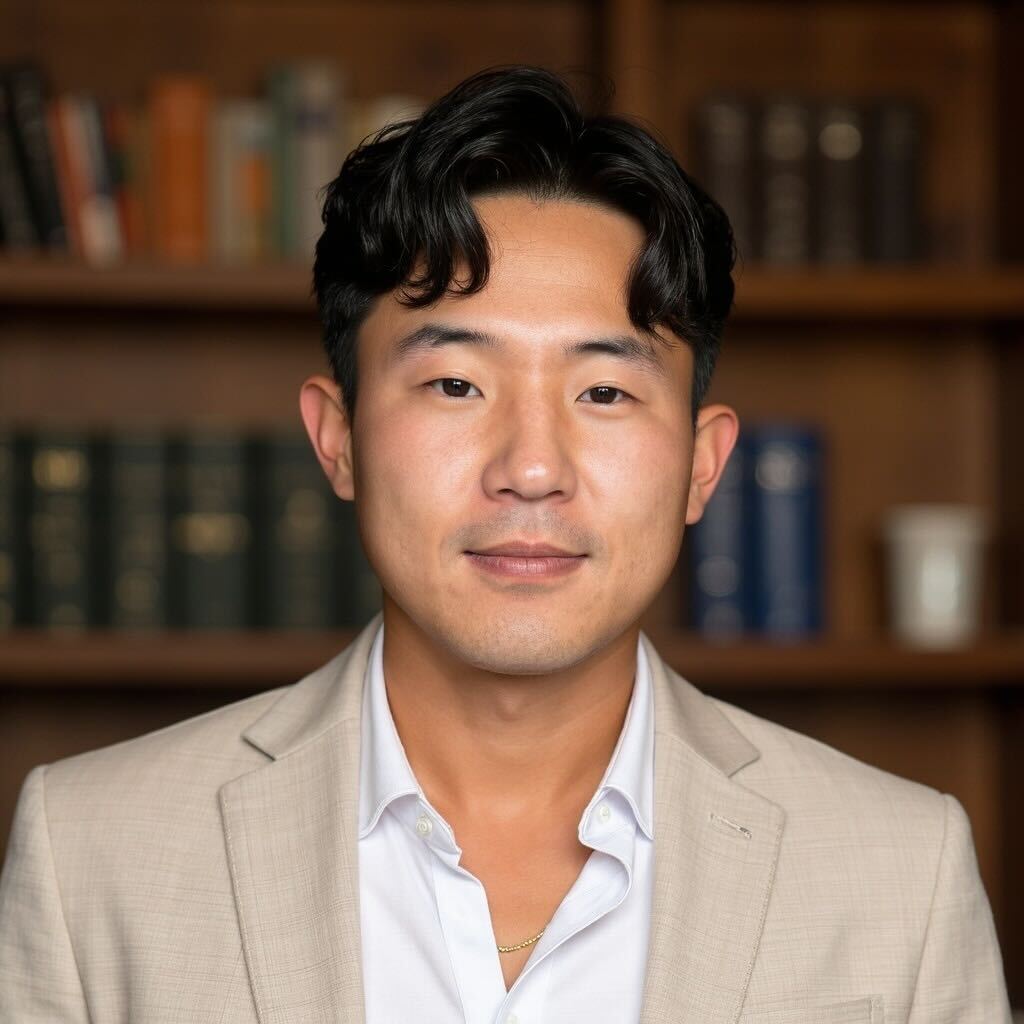
Joshua Lee founded Stable Scale after building revenue teams from the ground up — starting as a BDR and Business Consultant, moving through Solutions Engineering and Account Management, to founding and leading sales and partnerships at growth-stage software companies across field services, IoT, sustainability, and property management.
A significant part of that career was spent inside field service businesses — helping companies grow from a single location to national operations, from a few hundred thousand in revenue to millions. The operational patterns in those businesses: the key-person dependencies, the processes held together by habit rather than design, the digital presence that never kept pace with the quality of the work — are the same patterns he watched growing up in a family of dentists.
His sister and father are both practicing dentists. He knows the gap between clinical excellence and operational scale not just professionally, but personally. That combination — field service growth experience and an intimate understanding of how private practices actually run — is what makes the private practice transformation work at Stable Scale different from generic healthcare consulting.
The sales and revenue work comes from the same place: having held every role from BDR to Head of Sales, having led GTM for a 600-person consultancy on projects like the Disney Magic Band and Carnival Medallion, and having seen the same sequencing failure play out across every industry. Stable Scale exists to fix that. People first. Process second. Technology third.
What we stand for
1.
From dependent to predictable
Every engagement ends with the business performing without us in the room. That's the whole point — whether it's a practice that runs when the owner is on vacation, or a sales organization that makes its number without two people carrying everyone else.
2.
Recovery before growth
Most clients have revenue sitting on the table before they need to go find new revenue. Collections performance, unclosed pipeline, patients lost to friction that could be fixed — we find that first, because it usually funds everything else.
3.
Honest about fit
We turn down engagements that aren't right. If your biggest problem isn't something we solve well, we'll tell you that in the first call — and point you somewhere better.
4.
AI as infrastructure, not identity
We've built systems that produce outputs most teams can't match manually. We use them where they earn their keep. It's part of the process — not the story we sell.
Who we work with
Stable Scale works with a small number of clients at a time.
We're selective because the work requires real partnership. Here's who we take on — and who we're probably not the right fit for.
Good fit
✓Practice owners doing $1M–$10M ready to build the business, not just the practice
✓Sales leaders with 5–25 reps where the 80/20 problem is costing real revenue
✓Operators who want a working system, not a report they'll shelve
✓Leaders who are willing to do the people and process work before buying software
Probably not a fit
✕Looking for a quick fix or a one-time audit with no follow-through
✕Want someone to implement without involving the team
✕Already know the answer and just want validation
✕Not ready to have honest conversations about what's actually broken
Meet the team
The people behind the work.
We're operators who've been in the room — on both sides of the table. Here's who you're actually working with.
Joshua Lee
Founder & Principal Consultant
Joshua has held every seat in the revenue org — BDR, Business Consultant, Solutions Engineer, Senior AE, Founding AE, Head of Sales, and Head of Partnerships. He's scaled revenue teams from $500K startups to $20M+ and led GTM strategy across field services, IoT, sustainability, and property management. Prior to Stable Scale, he led GTM for a 600-person consultancy delivering transformation projects for Disney, Carnival, and Fortune 100 companies — including the Disney Magic Band and Carnival Medallion programs.
A significant part of his career was spent helping field service businesses grow from single locations to national operations. His sister and father are both dentists — which means the operational and digital gaps in private practice aren't abstract to him. He's watched them up close for years. Stable Scale sits at the intersection of all of it: the revenue expertise, the operational experience, and the personal understanding of what it actually takes to run a private practice.
Head of Sales & PartnershipsRevOps & GTM Strategy$500K → $20M+ Revenue GrowthFortune 100 ConsultingPrivate Practice OperationsField Services · IoT · SaaS
← Back to home
Insights
Frameworks, case analyses, and white papers from real engagements. Written for operators, not consultants.
Private Practice Ops
Why Dental Practices Keep Buying Software That Doesn't Stick
The problem isn't the software. It's the order. Here's what has to come first before any technology investment will hold.
Private Practice Transformation8 min read
Sales
The 80/20 Sales Problem: Why the Fix Isn't Hiring Better Reps
Most sales leaders diagnose this as a talent problem. It's almost always a systems problem. The data tells a clear story.
Sales Excellence6 min read
White Paper
People → Process → Technology: Why Sequencing Is the Only Thing That Matters
A framework for running transformations that are still working two years after the engagement ends.
Framework12 min read
Private Practice Finance
Your Collections Rate Is Probably 8 Points Below Where It Should Be
A 90-day operational playbook for recovering revenue sitting uncollected in your AR aging report right now.
Private Practice Transformation10 min read
Sales Tools
How to Build a Sales Playbook Your Team Will Actually Use
Most playbooks get ignored within 30 days. Here's how to build one that sticks — and how AI keeps it current.
Sales Excellence7 min read
White Paper
The State of Private Practice Operations in 2025
Where multi-location practices are finding leverage — and where they're still stuck. Patterns from 50+ operator conversations.
White Paper15 min read
← Back to home
Book a discovery call
30 minutes. No sales deck. An honest conversation about your operation and where the real opportunities are — whether we end up working together or not.
✓
30 minutes, Zoom
✓
No pitch, no pressure
✓
You'll leave with something actionable
✓
Honest about fit
Step 1 of 2
Tell us a bit about yourself
Takes 60 seconds. Helps us make the most of the 30 minutes together — and lets us follow up if something comes up on your end.
✓
Got it — now pick a time that works for you
We received your details. Select a slot below and you will get a Zoom invite automatically.
← Back to home
Founder & Principal
Joshua Lee
Seattle native. Second of four. Korean-American. Built a career from the ground up across every role in the revenue org — and founded Stable Scale to do for other businesses what he watched too many fail to do for themselves.
The son of someone who actually lived the American dream.
Joshua's father grew up in Korea, the youngest of seven. At five years old, he moved to Tacoma, Washington with his eldest brother — two kids, a new country, and not much else. What followed was the kind of story that sounds like a film but was just his life: a hard childhood, a Division I athletic career at Colgate, a master's degree from Columbia, military service, and a deployment back to Korea where he met Joshua's mother.
He came back and built a dental practice in Renton, Washington. He still operates it today.
That's the bar Joshua grew up against. Not stated explicitly — just demonstrated, every day. Work hard. Build something real. Don't stop.
The household
Second of four kids. Loving but firm — the way first and second-generation Korean-American families tend to be. High expectations. Deep loyalty. Competitive with each other, always functioning as a unit.
The pattern it set
Results-driven. Creative. Most effective working within a structure he's helped design. The same dynamic he'd spend his career trying to build in every team he joined.
"My father moved to this country at five years old, became a D1 athlete, served in the military, and built a practice he still runs today. That's the bar."
The career
Every seat in the room. Every stage of growth.
Where it began
BDR · Business Consultant · Solutions Engineer
Learning how buyers think, how deals actually form, and how products work from the inside. The foundation that made everything else make sense.
In the field
Senior AE · Founding AE · Account Manager
Building pipeline from scratch, closing deals at every stage, and learning what separates businesses that grow predictably from those that don't.
Leading teams
Head of Sales · Head of Partnerships
Scaled revenue teams from $500K startups to $20M+. Built GTM strategy, pricing, positioning, and the operating rhythms that make a sales org actually function.
At scale
GTM Lead · 600-Person Consultancy
Led go-to-market for large-scale digital transformation projects — including the Disney Magic Band and Carnival Medallion — for Fortune 100 companies.
Industries across the career
Field Services (Zuper)IoT Water Management (Apana)Sustainability & CSR SoftwareProperty Management TechFortune 100 ConsultingPrivate Practice Operations
"The difference between a good business and an extraordinary one almost always comes down to three things — in order."
The private practice connection
Personal as much as professional.
Joshua's father and sister are both dentists. He's watched them run exceptional practices for years — with the same admiration and the same mild frustration. Clinical excellence is there. The business infrastructure hasn't kept pace.
He's also spent years inside field service businesses — plumbing, HVAC, manufacturing, trades — helping them grow from single locations to national operations. The challenges are identical to private practice: a skilled operator at the center, systems that depend on that person being present, a ceiling that arrives right when growth should be accelerating.
The private practice work at Stable Scale isn't a pivot or an add-on. It's the intersection of a career's worth of field service growth experience and a lifetime of watching people he loves hit the same avoidable wall.
🏥
Father & sister are dentists
The operational and digital gaps in private practice aren't abstract. He's watched them up close his entire life.
🔧
Field service businesses at every stage
From single-location operations to national scale. The same growth ceiling, the same sequencing problems, the same fix.
🔗
Private practice and field service share the same DNA
Skilled operators. Systems that outgrow their founder. A business that performs when the owner is in the room and struggles when they're not.
Principles
Five things that are almost always true.
Not frameworks. Not methodologies. Just patterns that have held across every industry, every stage, every engagement.
"Variability is the enemy of scalability."
"Hiring, training, and retaining good talent is the hardest part of any business."
"You can't improve what you don't measure."
"Technology can't solve a people or process problem. Neither can AI."
"AI is a force multiplier — but only if there's something worth multiplying."
Outside the work
Seattle native. Perpetual learner. Decent golfer.
Joshua lives on Mercer Island, Washington. When he's not working, he's outdoors — skiing, hiking, and playing golf with the same competitive energy he brings to everything else. Soccer and basketball when the schedule allows. Football when it doesn't require anything but watching.
He's been to 17 countries. Myanmar is the one he still thinks about — a country of extraordinary people and infrastructure that hasn't caught up to them yet. It reinforced something he'd been seeing in businesses for years: the gap between what's possible and what exists is almost always a systems and sequencing problem, not a talent one.
Family-oriented. Three siblings he's still competitive with. A father's work ethic he's still trying to match.
⛷️
Skiing & hiking
Pacific Northwest year-round
⚽
Soccer, golf, basketball, football
Competitive in all of them
🌏
17 countries
Myanmar being the most memorable
🎮
Video games
When time permits
"I've been to 17 countries. Myanmar is the one I still think about."
What it's like to work together
Unusually direct. Genuinely invested. Small number of clients at a time.
Clients describe working with Joshua as unusually candid. He'll tell you what he actually thinks — including when the problem isn't what you think it is, or when you're not ready for what you're asking for. That's not a style choice. It's the only way the work actually helps.
Engagements are available as project-based or retainer. The work is primarily remote, with on-site visits when the engagement requires it — and some things you can't diagnose over a Zoom call.
Engagement structure
Project-based or retainer, depending on what the situation calls for. Scoped clearly upfront — no ambiguity about what you're paying for.
How we work
Primarily remote. On-site visits when the work calls for it. Based in Seattle — available across the US.
Client load
Small number of clients at a time. That's not a scarcity tactic — it's how the work stays good. If you're the right fit, you'll know it in the first call.
← Back to home
Privacy Policy
Last updated March 2025
Stable Scale LLC ("we," "us," or "our") operates stable-scale.com. This policy explains what information we collect, how we use it, and your rights.
Information we collect
When you submit the discovery call request form, we collect your name, email address, company name, website, and any context you choose to provide. This information is transmitted via Formspree and stored in our email inbox. When you book a call via Calendly, Calendly collects your name, email, and scheduling preferences per their own privacy policy.
How we use your information
We use the information you submit solely to prepare for and conduct discovery calls, and to follow up on your inquiry. We do not sell, rent, or share your personal information with third parties for marketing purposes.
Third-party services
This site uses Formspree (form handling), Calendly (scheduling), and Google Fonts (typography). Each service operates under its own privacy policy. We do not currently use cookies or analytics tracking.
Data retention
Inquiry information is retained in our email systems for as long as necessary to manage the business relationship. You may request deletion at any time by emailing josh.lee [at] stable-scale.com.
Contact
Questions about this policy? Email josh.lee [at] stable-scale.com
✓ Request received — we'll be in touch within one business day.